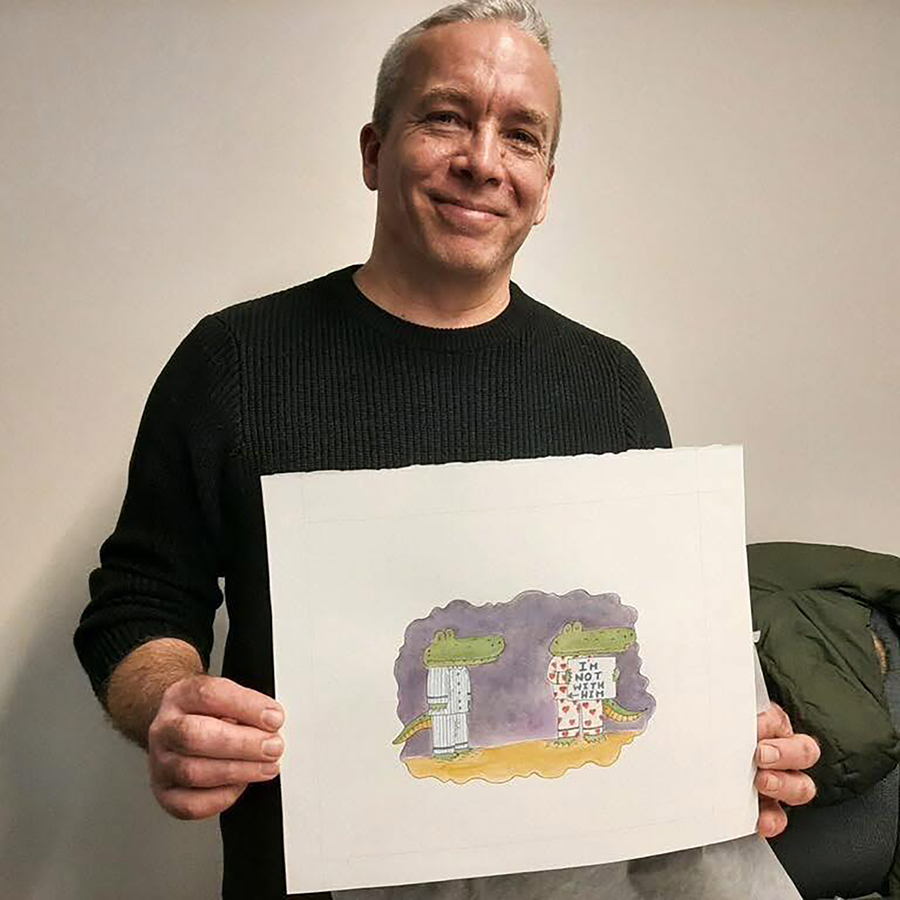
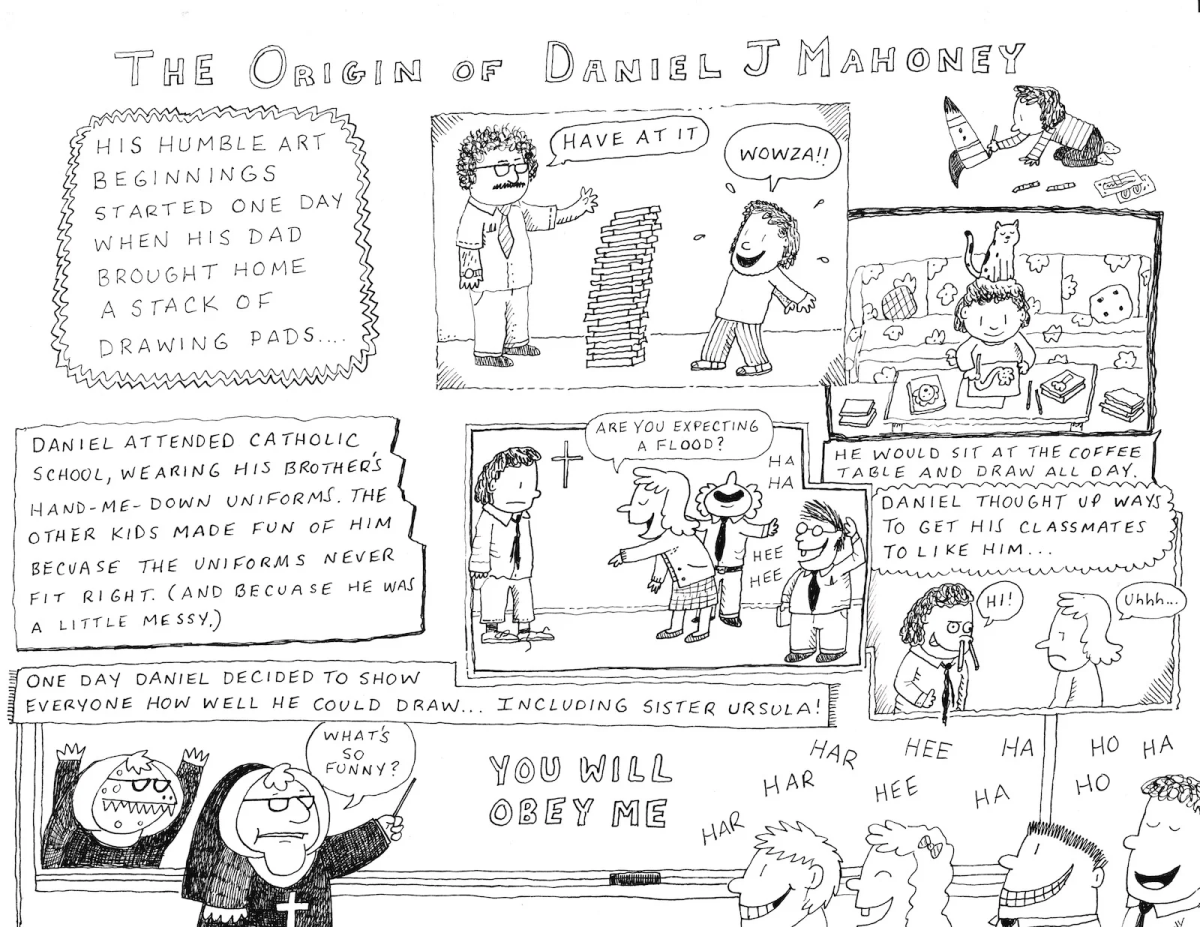
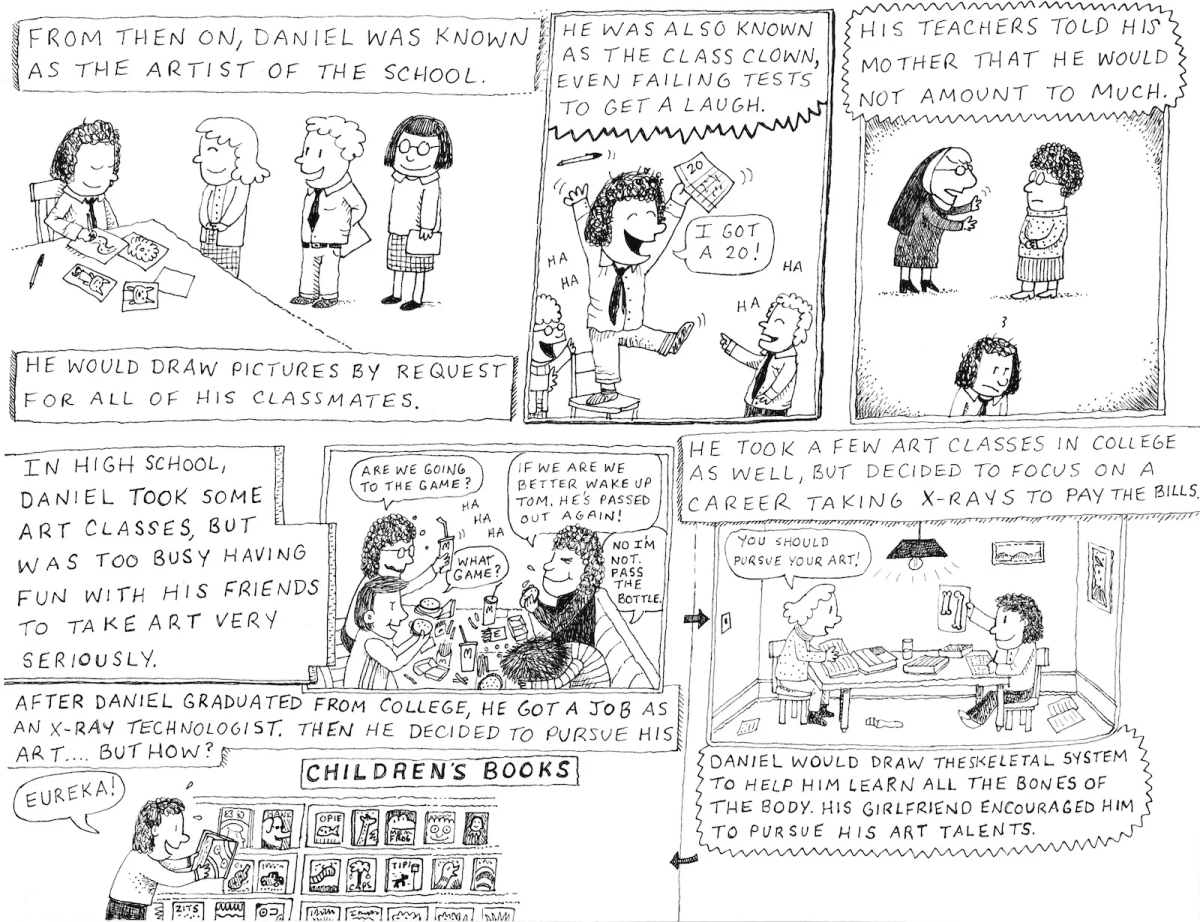
Award-winning author and illustrator Daniel J. Mahoney has been telling stories and drawing since he was old enough to hold a crayon. When he’s not creating books for young readers, he can be found riding his bike, chasing waterfalls with his hiking club, and zapping people with X-rays at the hospital where he works as an radiologic technician. He creates his art traditionally using a variety of mediums including watercolor, acrylic, acrylic gouache, gouache, micron markers, and pen and ink. He grew up in Albany, New York, and currently resides on a cozy street in the country with his amazing daughter.
“Mahoney balances absurdity with heart: from deadpan narration to
thin-lined, retro-inflected illustrations.”—Publisher’s Weekly
“Reminiscent of James Marshall’s work. . .”—Kirkus
Visit Daniel online at: www.danieljmahoneyauthor.com and www.instagram.com/pick_lesandpens/
Interviews:
• Timesunion.com (interview with Donna Liquori from the Times Union, January 2026)
• Open Book | WTEN+ | My Cat is a Secret Agent Daniel Mahoney interview
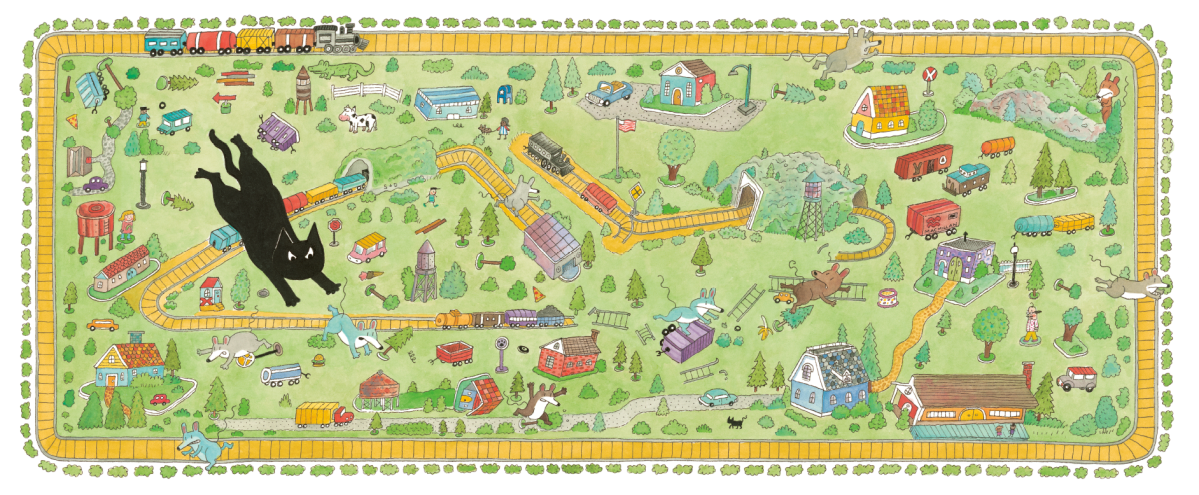
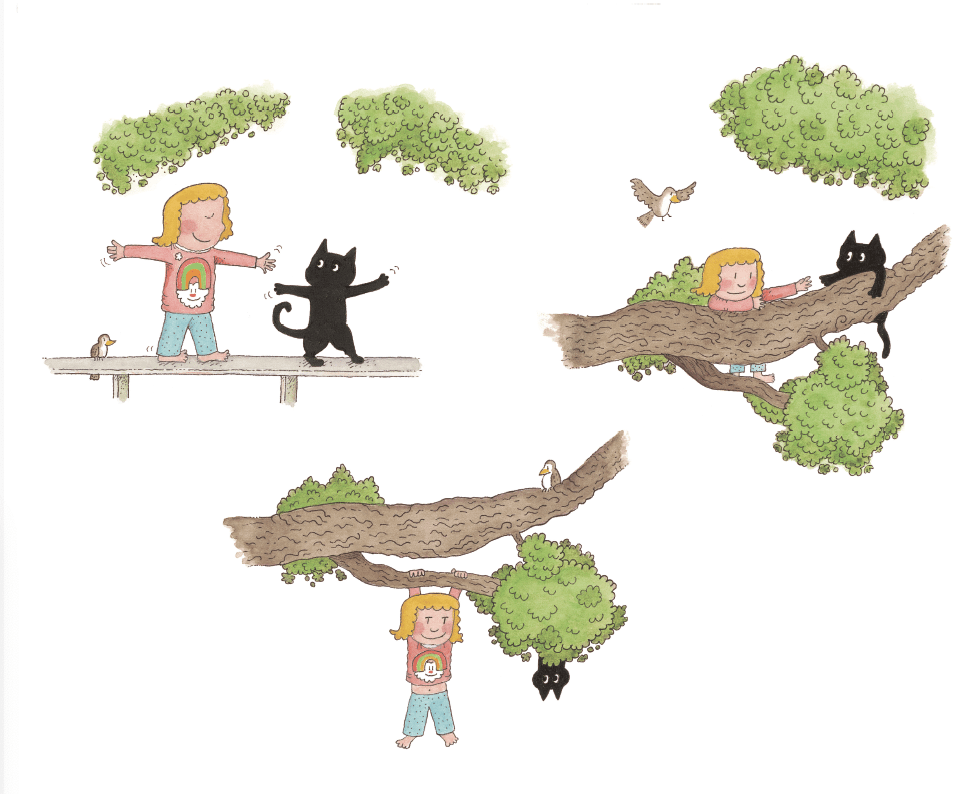
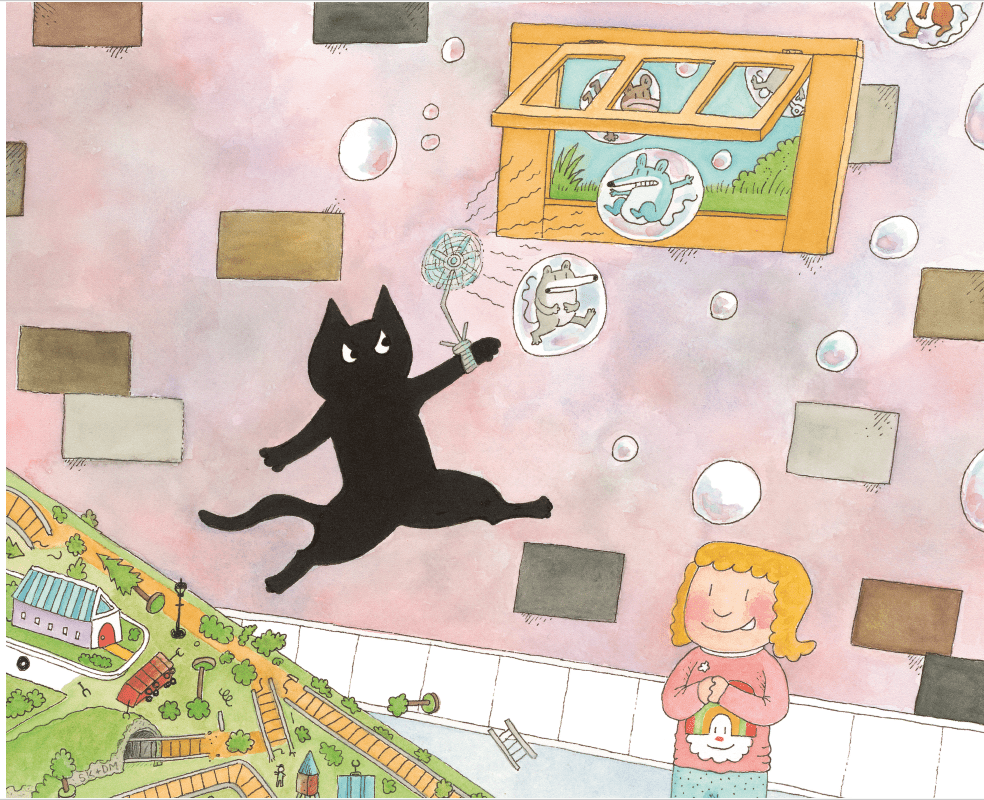
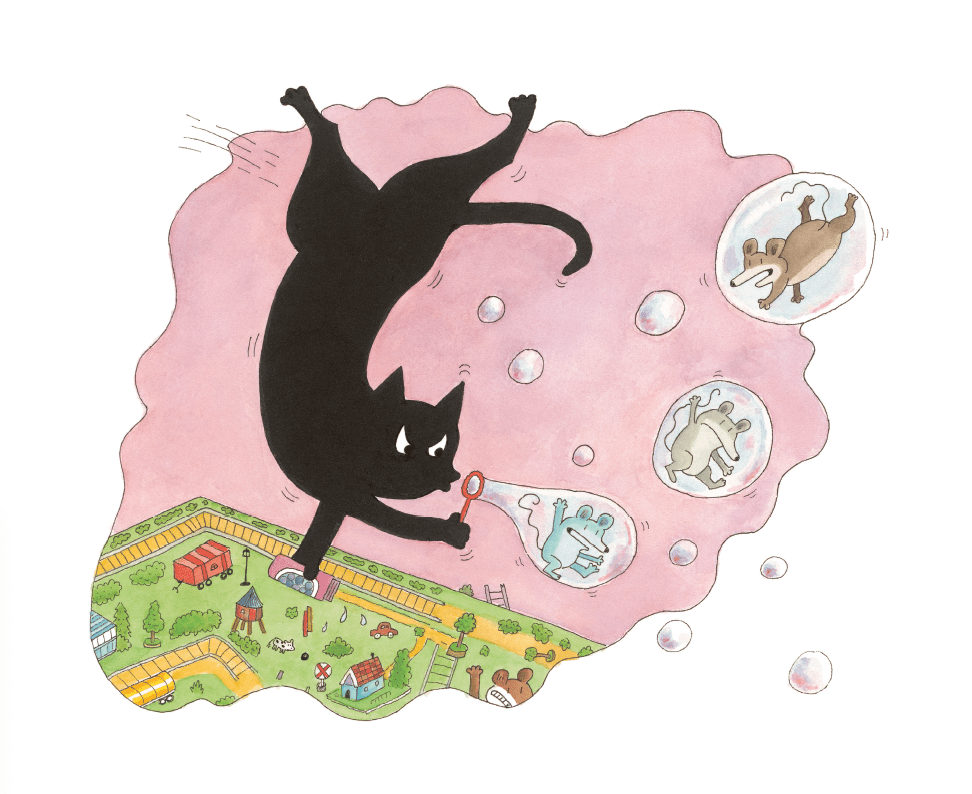
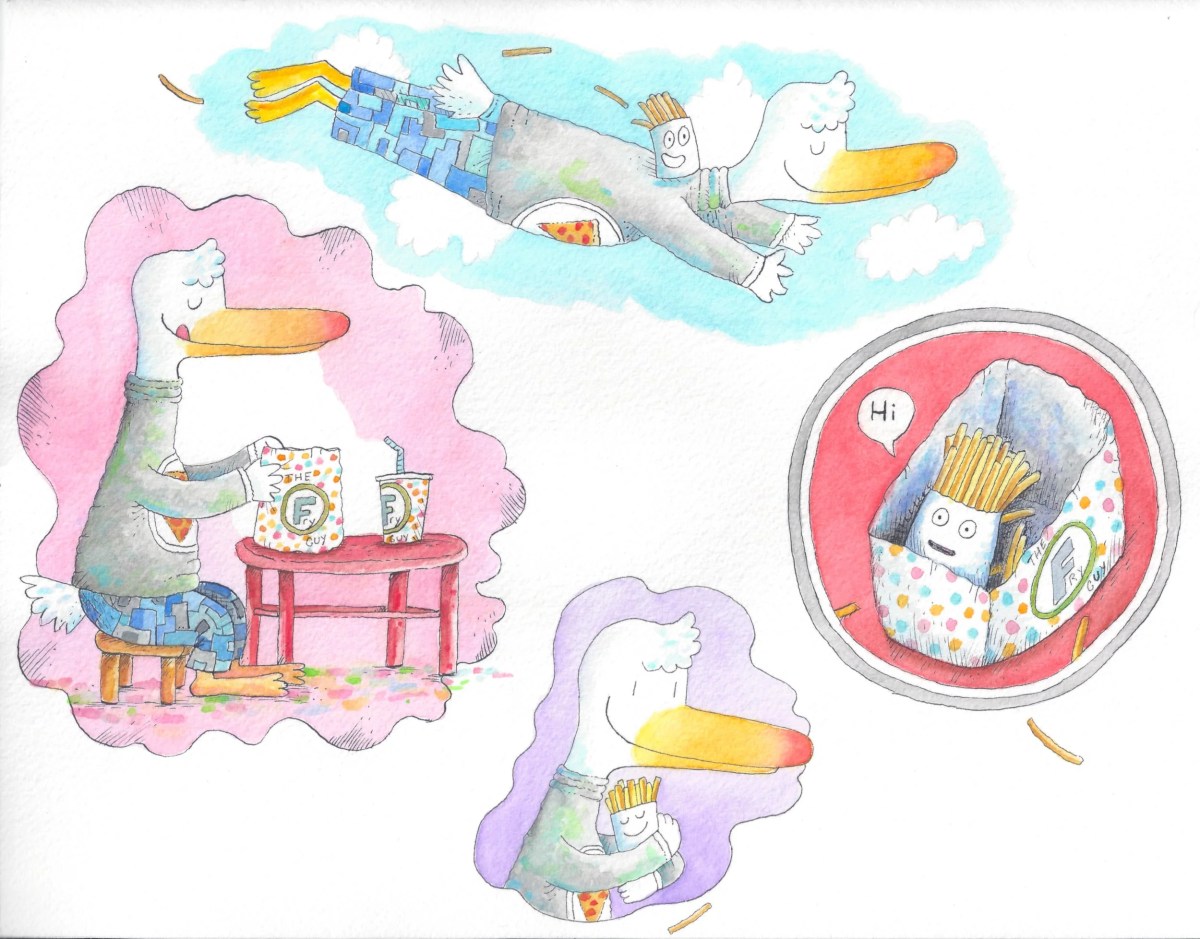
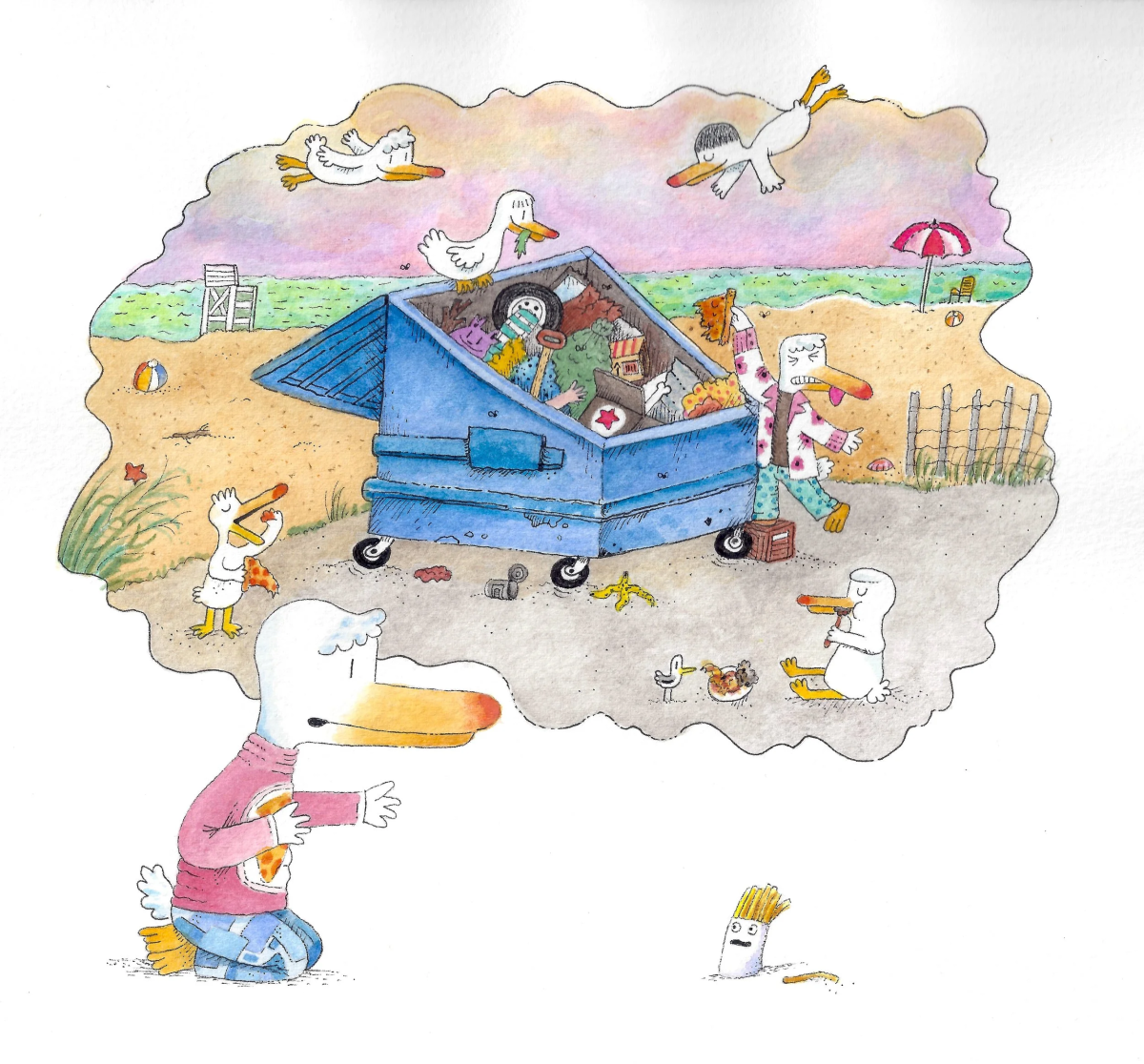
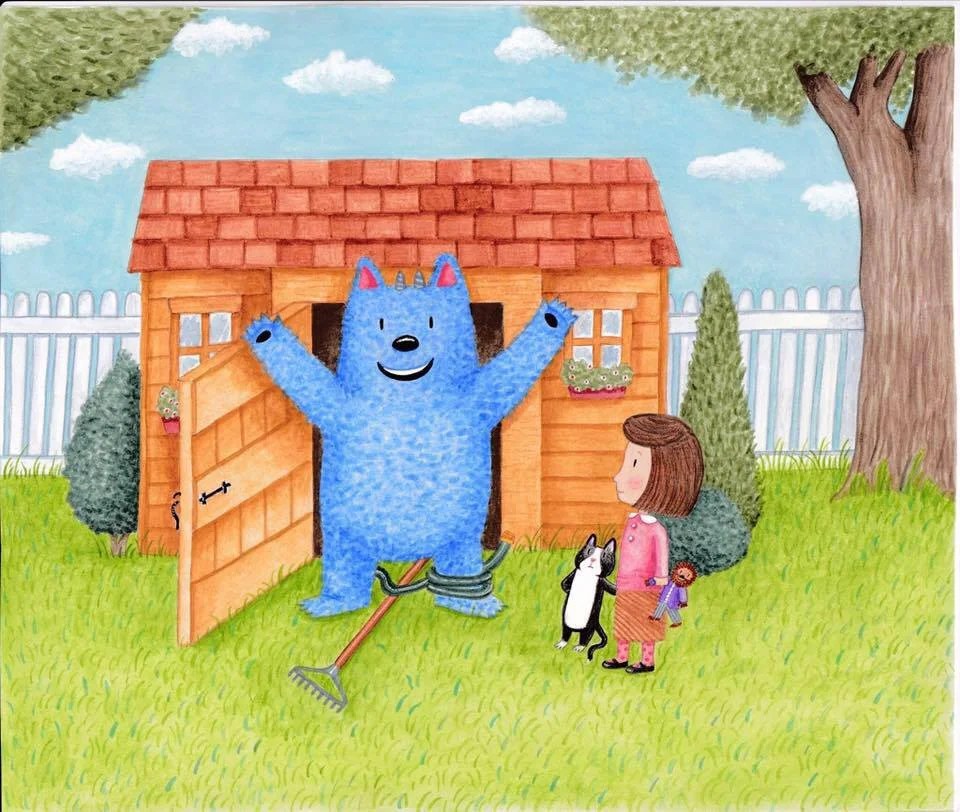
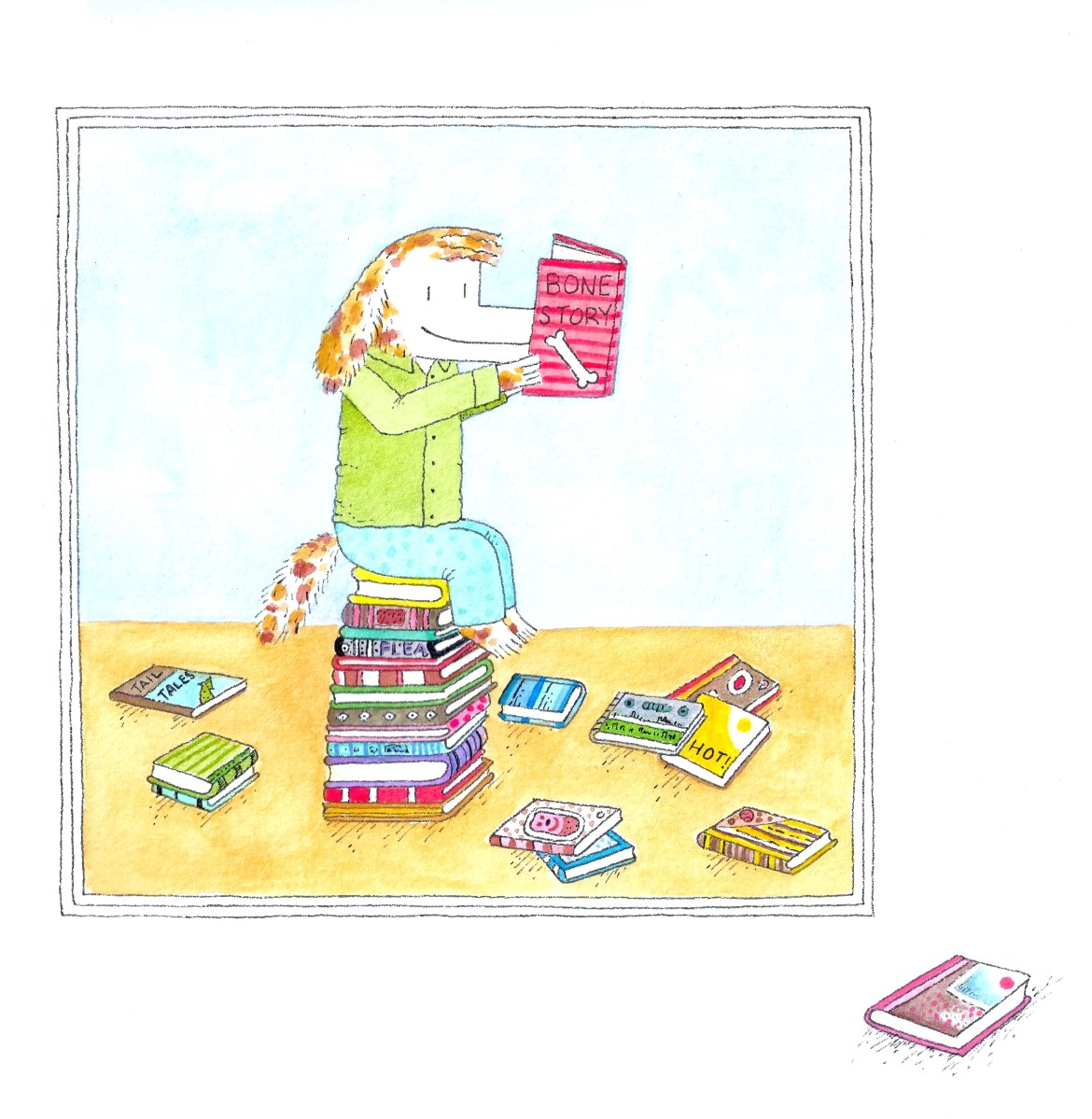
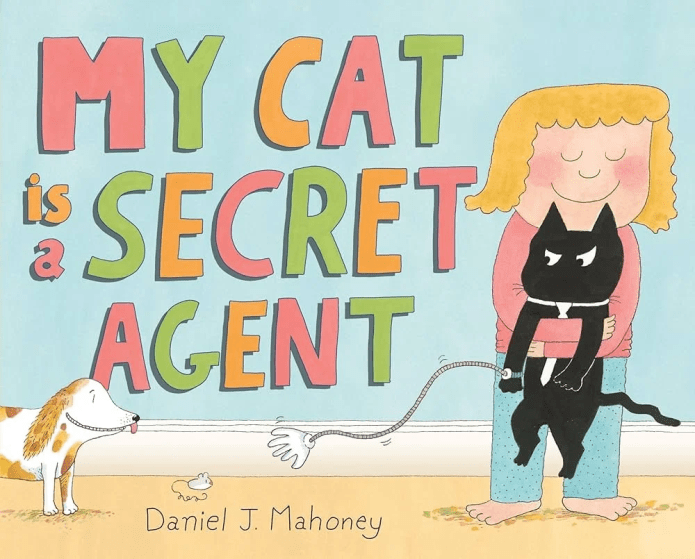
My Cat is a Secret Agent
by Daniel J. Mahoney
Farrar, Straus and Giroux | 2025
“With his droll drawings, Daniel J. Mahoney takes secret agenthood into whole new realms. I loved the surrealistic ending.” ―Caldecott Medal winner Paul O. Zelinsky
“This silly tale, with characters drawn in a style reminiscent of James Marshall’s bulbous creatures with simplified faces, is a joy to read out loud. With a plethora of amusing background details, this will be fun for all young cat lovers who are positive their feline friends live double lives.” ―Booklist
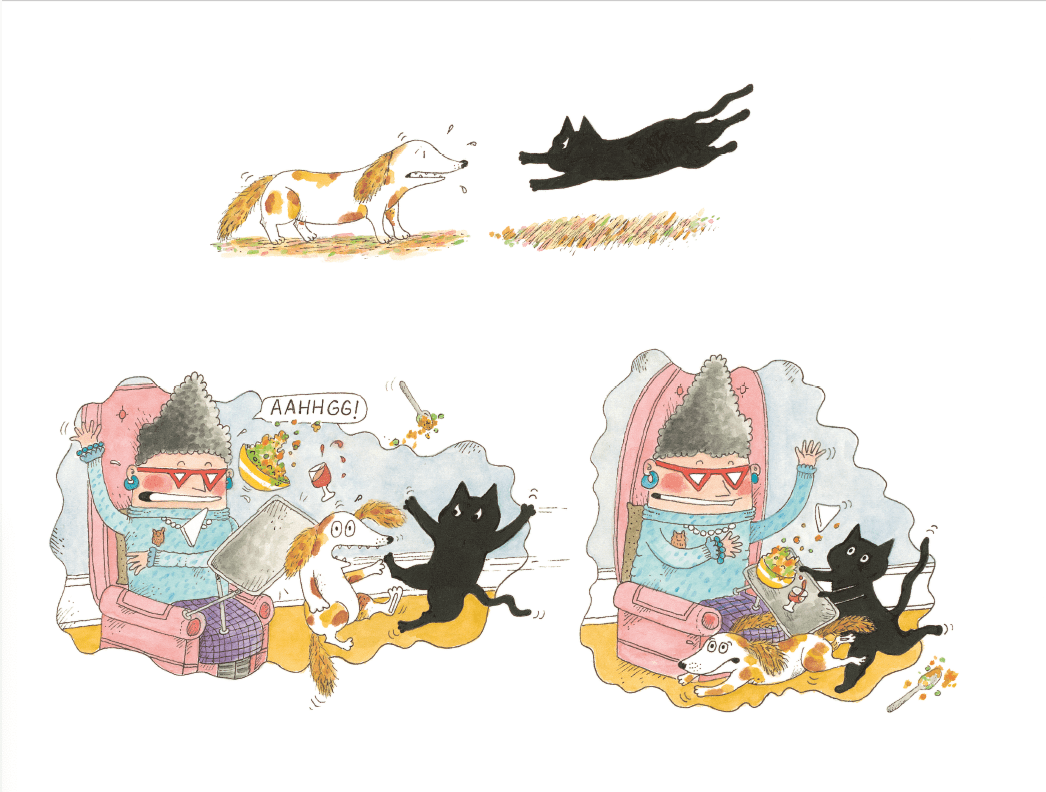
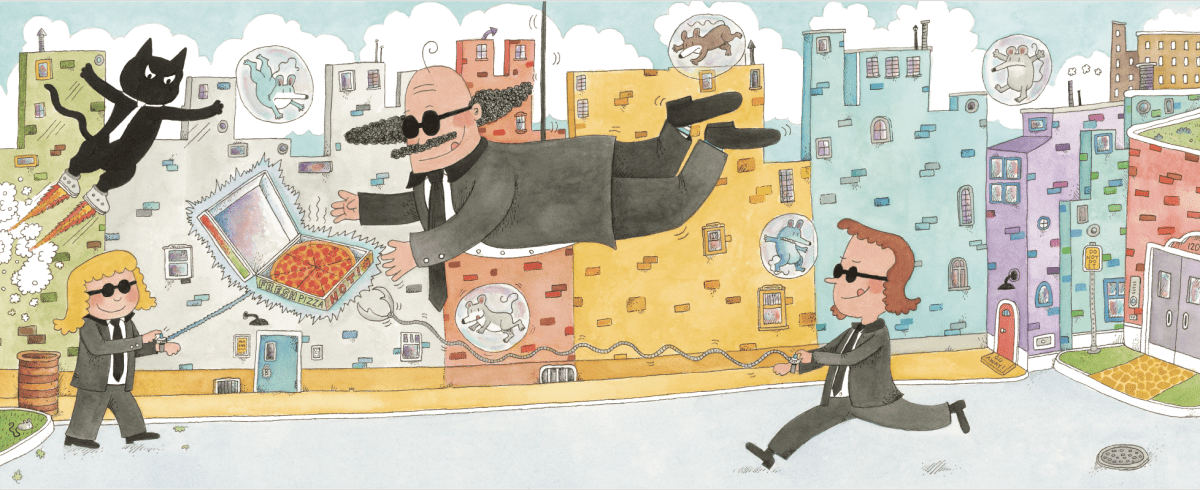
“Samantha adores her cat Walter, but he isn’t just any cat—his code name is Kitty Pants, a graduate of the Secret Agent Academy for Gifted Felines. Walter works hard as a Secret Agent, ingeniously chasing away intruders (mice) and keeping the family safe, all while causing mayhem and annoying Samantha’s parents. It’s not until Mom witnesses Walter saving Samantha that her parents realize how clever Walter is. Children will love the humor. Illustrations are done in ink with watercolor and are heavily detailed; readers will especially love poring over the end papers. VERDICT This silly and funny pet story is sure to find an audience.” ―School Library Journal
“Mahoney (We Don’t Eat Our Neighbors) incorporates Rotten Ralph-like visual loopiness from the very first spread of this offbeat picture book. Young Samantha, the story’s narrator, seems nonplussed when the stray black cat the family adopts proves no less than a secret agent. Walter, as he’s dubbed, reveals to Samantha his certifcate from the Secret Agent Academy for Gifted Felines, and his code name: Agent Kitty Pants. Walter demonstrates his espionage skills by rescuing the family from various threats, including mice invading Dad’s train set. (The kitty expels the rodents by encasing them in soap bubbles and floating them out the window.) Despite Samantha’s unshakable belief in the cat’s prowess, Mom and Dad remain skeptical, suggesting that if Walter is so great, he might order a pizza with extra pepperoni. The parental doubts persist until Walter heroically prevents Samantha from a taking nasty tree fall. Mahoney balances absurdity with heart: from deadpan narration to thin-lined, retro-inflected illustrations, every element serves the delightfully skewed logic of the family’s world. Human characters are portrayed with pink skin. ” ―Publisher Weekly
“Character designs reminiscent of Dav Pilkey’s Captain Underpants, albeit with gentler, watercolor washes and thinner linework, might add appeal to cat-loving readers confident enough to strike out on their own.” ―The Bulletin BCCB
“This secret agent is ready to prevent a cat-astrophe. Blond-haired, pale-skinned young Samantha knows that Walter, the family’s cat, is no ordinary feline; his code name is “Agent Kitty Pants,” and he regularly embarks on very important, top-secret missions. Samantha’s parents are exasperated when Walter takes Dad’s newspaper into the litter box, shreds the plumber’s pants, and bullies the neighbor’s cat, and they’re skeptical when Samantha tries to defend the mischievous kitty (the neighborhood cat had weapons of mass destruction…really!). Readers may be a bit unconvinced themselves, though scenes of Walter holding out his diploma from the Secret Agent Academy for Gifted Felines or sneaking about the house do provide some evidence—and make for some delightful imagery. Youngsters will be on Samantha’s side after they witness Walter use a fancy wristwatch—and his “dazzling secret agent moves”—to stop some mice from taking over the basement, and Mom and Dad are fully persuaded when Walter prevents Samantha from falling from a tree. Reminiscent of James Marshall’s work, Mahoney’s inviting, informal art is occasionally inconsistent in terms of perspective but always brimming with caricaturish charm. Walter’s more miraculous adventures are given nearly as much space as his more outrageous ones. Is he truly a secret agent? Unclear, but Mahoney clearly understands that all felines contain multitudes. Chaotic and offbeat feline fun—cats and cat lovers are sure to approve.“—Kirkus
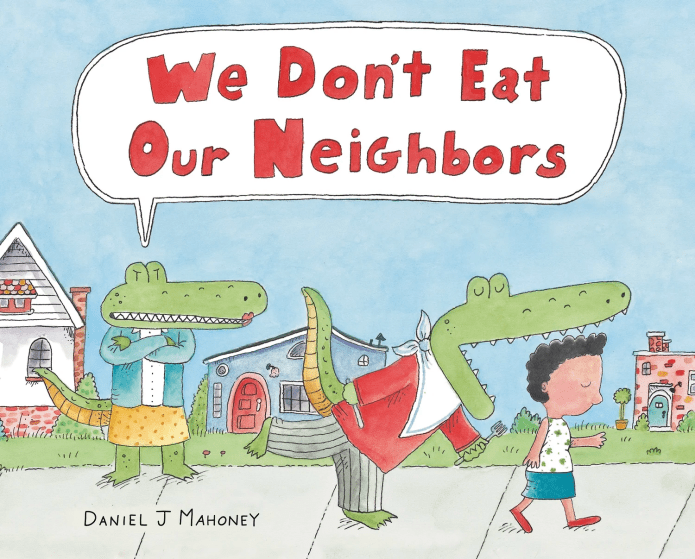
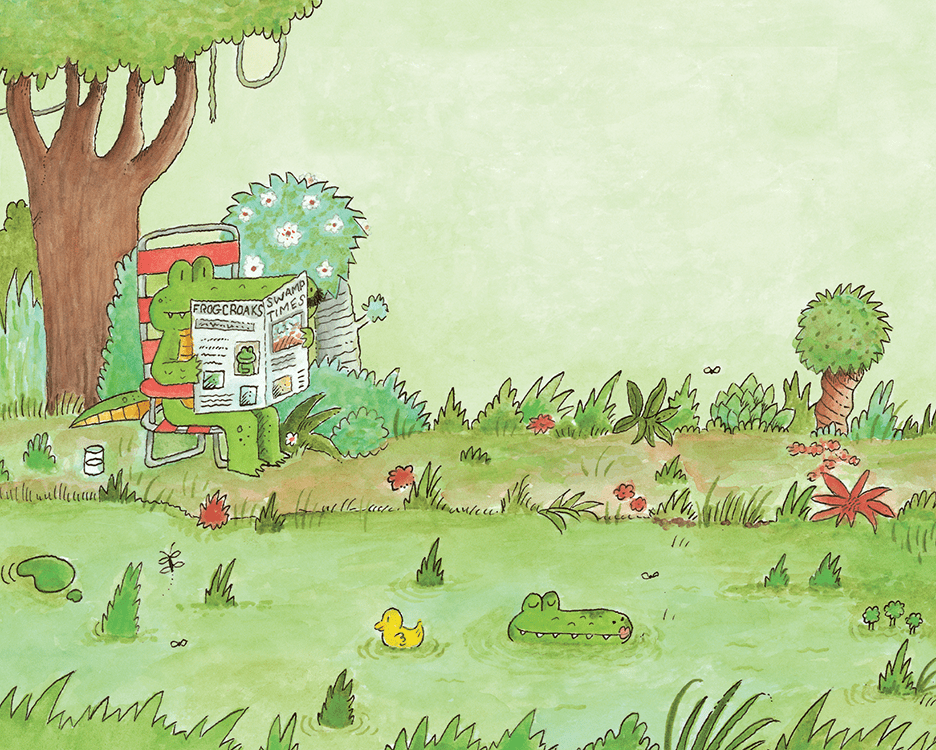
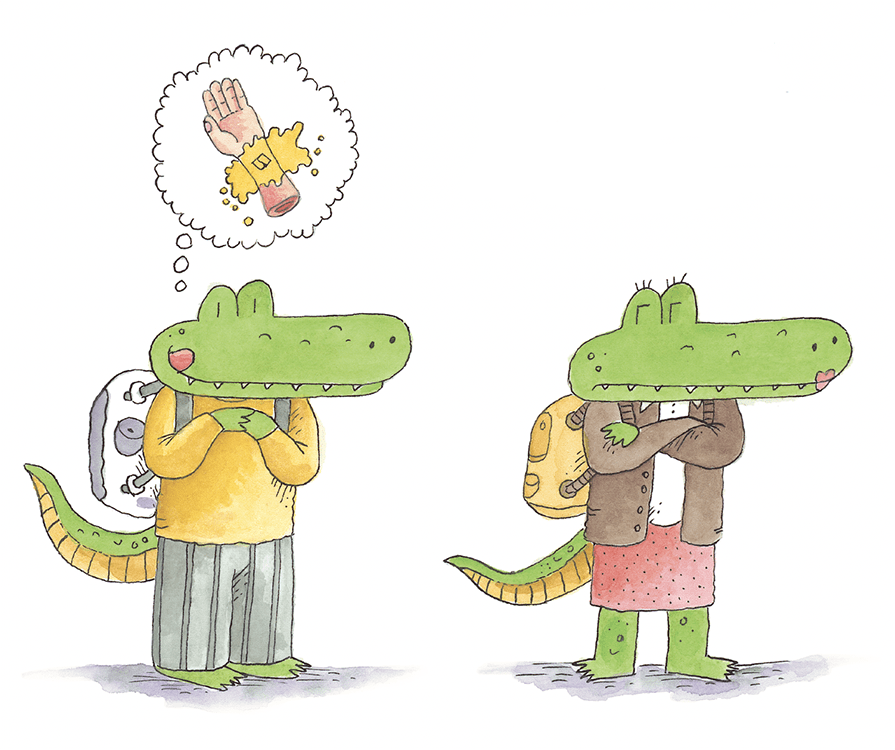
We Don’t Eat Our Neighbors
by Daniel J. Mahoney
Farrars Straus and Giroux | 2024
. . . . . . . . . . . . . . . . . . . .
• A Target Book Club selection
. . . . . . . . . . . . . . . . . . . .
“A fun and surprising classic picture book appeal threaded with a subversive and sometimes macabre laugh-out-loud text. It’s James Marshall meets Edward Gorey!” —Matthew Cordell, Caldecott Medalist
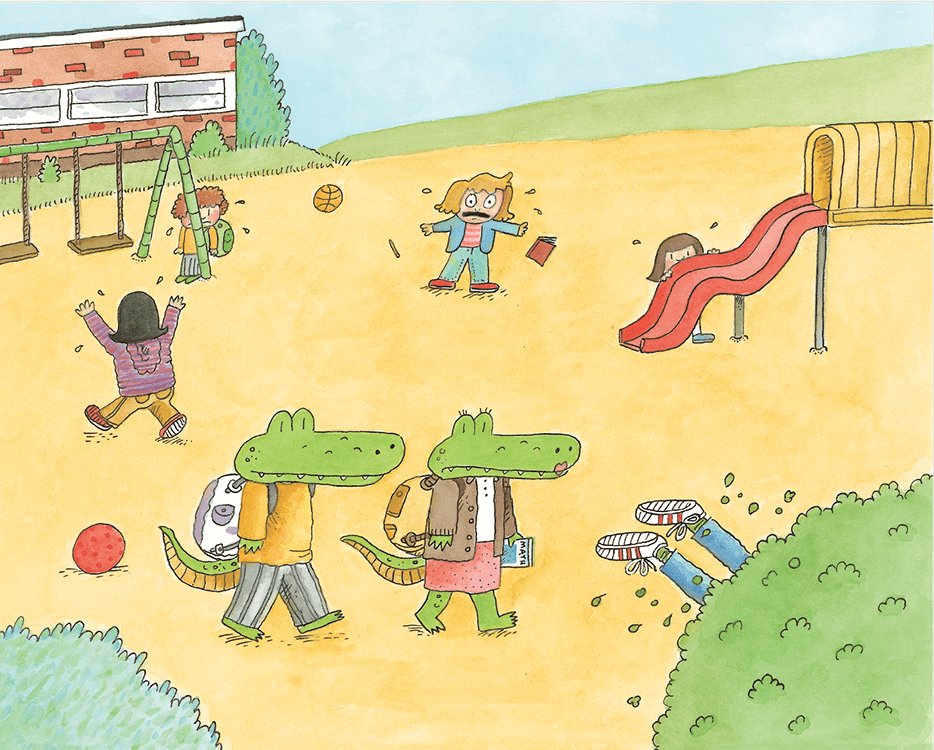
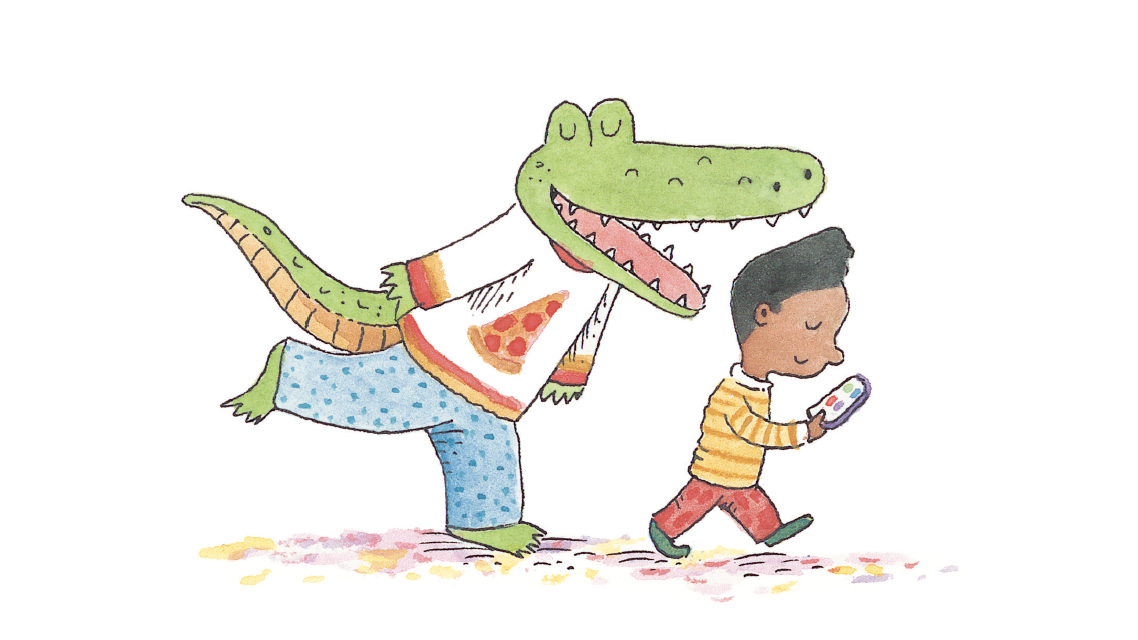
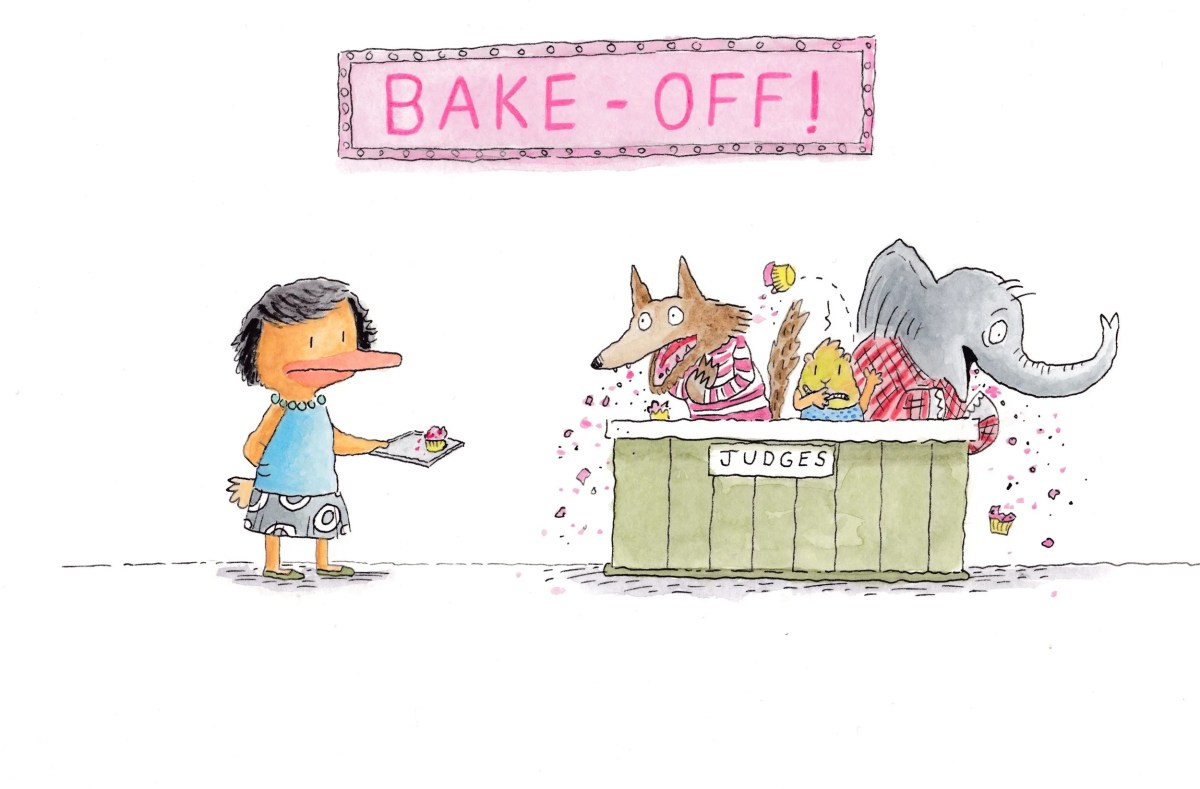
“In guileless line drawings that recall James Marshall’s style, Mahoney (Monstergarten) follows swamp-based alligator sibs Libby and Herbert as they move to a conventional human suburb. While their mother works to fulfill her dream to be a pastry chef and Libby makes friends, Herbert regards his classmates as tasty snacks. He nibbles and threatens more than he actually eats, but the siblings’ peers are nevertheless put off by his actions and his chilly, offhand words: “With a little pepperoni… anything can be pizza,” he muses, biting a child attending Libby’s slumber party. Libby cringes at Herbert’s misdeeds as their schoolmates demonstrate with signs: “Don’t eat us!” Only when a neighbor (whose son Herbert is salting and peppering) reveals, “I just hired your mom to be head pastry chef at my bakery. She has amazing talent” does Herbert realize that his cravings might be the reason his mother won’t succeed, and he works to redeem himself on the soccer field. In this work of anarchic comedy that moves to a story of empathy, Herbert realizes that following his animalian nature will impact someone he cares about, prompting a transformation that relies, in part, on that loved one’s meeting him halfway. Human characters are portrayed with various skin tones.” —Publishers Weekly
“Siblings Libby and Herbert Alligator are polar opposites. Libby loves the mud and slimy stuff of the swamp, while Herbert prefers to keep things neat and tidy. Another major difference is Herbert loves snacking on people. That poses a problem when Libby and Herbert’s mother gets a job as a pastry chef and the family has to move to a neighborhood full of people. Libby warns her brother that he shouldn’t eat their neighbors, especially if he wants to play on the soccer team. The Alligator siblings do their best to adapt to their new school, but Herbert finds it hard to fit in. Unfortunately, after one too many incidents of him trying to snack on his classmates, they are avoiding him. Herbert soon realizes if he doesn’t want to mess up his mom’s new job or his time at school, he’ll have to learn to not eat the neighbors. What at first is an amusing fish-out-of-water story with plenty of laughs turns out to be a story full of relevant life lessons about adapting to new environments, struggling to fit in, and learning self-control. With eye-catching, cartoonlike illustrations, and just a few sentences on each page, this book is a winning read-aloud sure to keep readers entertained. A funny tale about an alligator boy learning not to eat his neighbors; perfect for the picture book shelves or even the etiquette section.” —School Library Journal
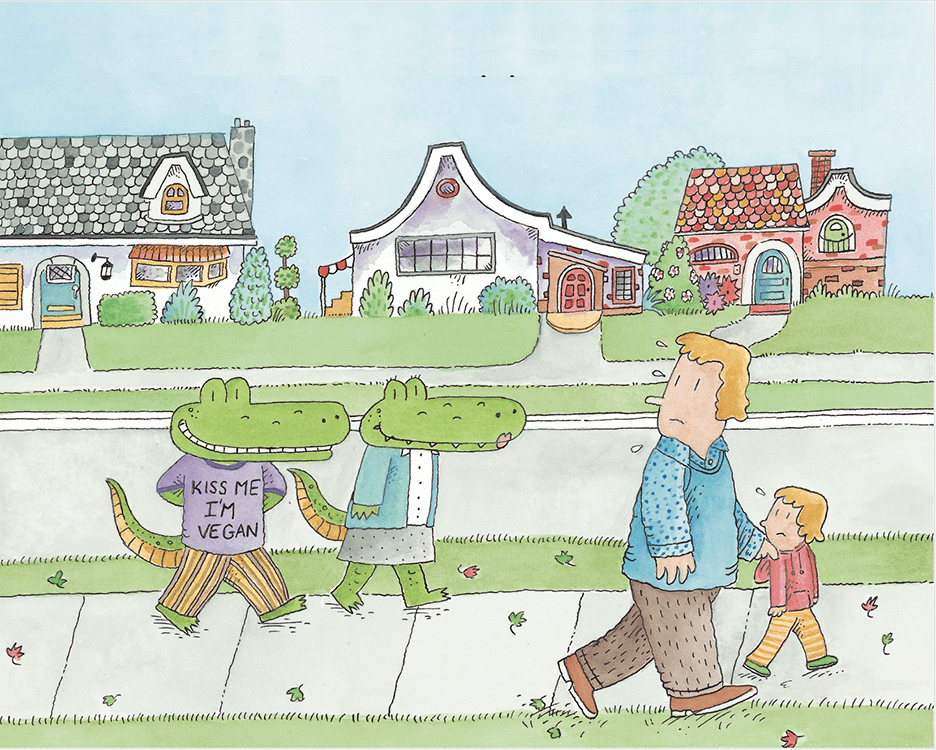
“This silly picture book has a delightfully dark sense of humor that fully leans into its nonsense, sure to make for a lively and laughter-filled story time.”Libby and Herbert are alligator siblings, and their parents want to move them out of the swamp and into a suburban neighborhood filled with humans. Just one problem—while their parents are vegetarian, and Libby’s people allergies became apparent after “nibbling on Herbert’s Boy Scout leftovers,” Herbert has quite a hankering for human flesh. Libby quickly makes friends, but a series of munching incidents leave Herbert an outcast at school. For the sake of his mom’s new job as a pastry chef, Herbert puts in an effort to avoid consuming his classmates, but his “Kiss Me I’m Vegan” shirt and “Eat Donuts Not People” sign are entirely unconvincing. Herbert finally proves that he can play nice without eating anyone when he’s given the chance to kick butt at soccer, and his classmates slowly accept that they won’t be on the menu at lunch time. This silly picture book has a delightfully dark sense of humor that fully leans into its nonsense, sure to make for a lively and laughter-filled story time. Rendered in ink and watercolor, the simple, steady art depicts Herbert’s bipedal family doing very human things like icing cakes and vacuuming, while text brings more complexity, using full sentences with dialogue that offer an appropriate challenge for older viewers who try it on their own. We may never get answers to why an alligator family would need to integrate with human society or if using a tail to hit a soccer ball is a legal move, but at least Herbert’s classmates are safe.”—The Bulletin BCCB
“An alligator family moves to a human neighborhood, but young Herbert’s penchant for people-eating makes it tough to forge friendships. A light touch and a lot of interrupted snacks, along with cartoonish illustrations, make for a silly tale that may remind readers of their own struggles with fitting in.“—The Horn Book
“A young alligator must learn to control his urge to eat people. Gator siblings Herbert and Libby move from the swamp to a suburban neighborhood when their mom gets her dream job as a pastry chef. They start wearing clothes, going to school, and even playing soccer. But Herbert has a big problem: He loves chowing down on people, and his classmates are so darn tasty! Herbert can’t stop gnawing on kids’ arms and legs. He just takes tiny nibbles, of course, but it makes him very unpopular. (His parents are vegetarians, and Libby is allergic, so she makes many friends.) When Herbert starts salting and peppering a boy who turns out to be the son of his mother’s boss, he realizes that his actions have consequences—he doesn’t want to ruin Mom’s job! Herbert decides to change his ways, and he even finds a good alternative to eating people: Mom’s human-shaped cookies. The title of this story may bring to mind Ryan T. Higgins’ We Don’t Eat Our Classmates (2018), which stars a lovable and equally destructive dinosaur who’s also wrestling with temptations. While readers may chuckle, poor Herbert doesn’t quite live up to the silliness of his dino counterpart, though the cartoon art does have an appealing, nostalgic, James Marshall feel.. “—Kirkus
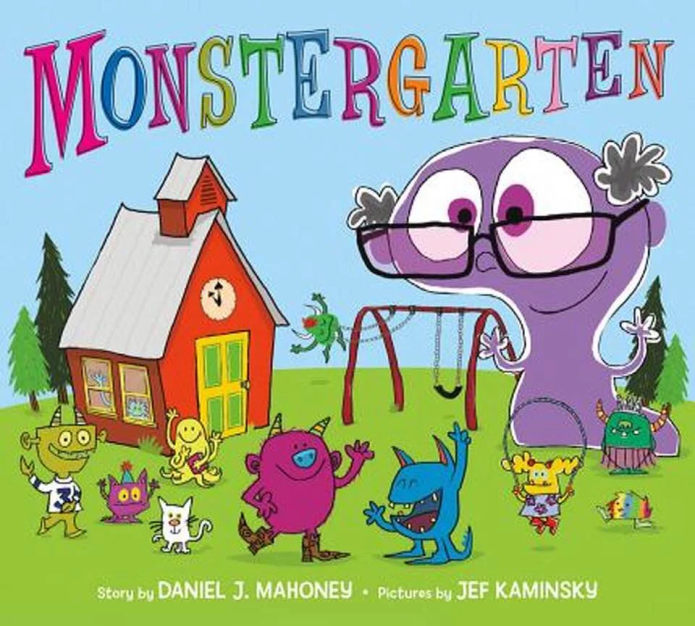
Monstergarten
by Daniel J. Mahoney, illustrated by Jef Kaminsky
Feiwel & Friends | 2013
. . . . . . . . . . . . . . . . . . . .
• a Scholastic Book Club selection
. . . . . . . . . . . . . . . . . . . .
“A diminutive fuchsia monster named Patrick has been told that being scary is a prerequisite for attending Monstergarten. Luckily, his gap-toothed blue friend, Kevin, offers to teach him how. On a funny wordless spread, Kaminsky shows the monsters making their scariest faces, hanging upside down, and stretching out their tongues (meanwhile, a cute white cat easily out-scares the pair). Though Kaminsky’s Day-Glo characters look like the adorable result of a biochemical spill, readers will recognize that Patrick’s mother’s advice (“Just be yourself”) is just as applicable to human classrooms as it is to monster ones.“—Publisher’s Weekly
“Typical kindergarten concerns: Will I like the other kids? Will they like me? It’s the same deal in the monster world but with a twist; the question for purple, striped-horned Patrick is whether he will be scary enough. Good thing he has a blue, dinosaur-tailed best bud named Kevin, who is happy to teach Patrick everything he needs to know. They practice scary faces and study monster behavior in books (growling, fang flashing, and the like), but none of it puts Patrick at ease: What was the right way for him to be scary? Kaminsky’s cutely primitive illustrations have every ounce of the bright zip digital tools can bring, with bold splotches of color dominating otherwise white pages, especially when the text disappears to allow for prime-time monster mugging. Mahoney doesn’t let it end monstrously, of course, as it’s Patrick who must be scary on the first day of monstergarten in order to put Kevin at ease. Just about the happiest darned book about being scared you’re likely to find.“—Booklist
“Sensitive monster Patrick worries that he won’t be scary enough for Monstergarten; future classmate Kevin, “an expert,” tutors him in the art of spooking. When Kevin has separation anxiety on the first day of school, Patrick puts what he’s learned to excellent use. This fresh take on a familiar situation features dynamic, cartoony digital art that couldn’t scare a fly.“—The Horn Book
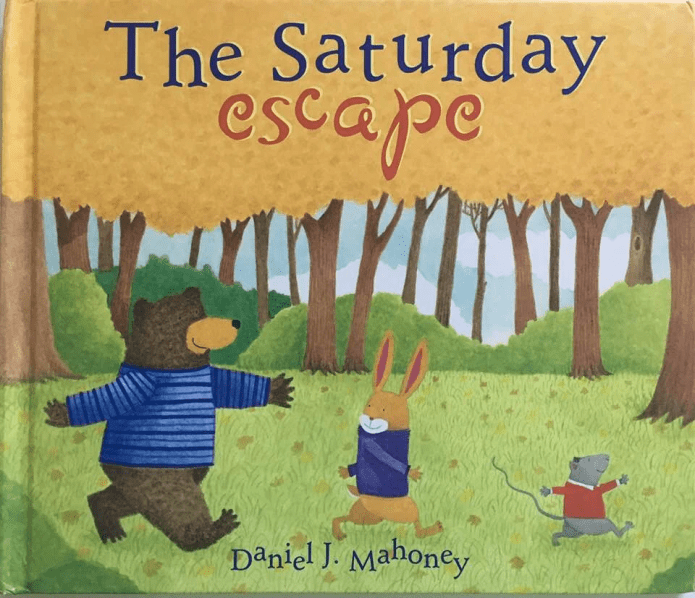
The Saturday Escape
by Daniel J. Mahoney
Clarion Books | 2002 (OP)
. . . . . . . . . . . . . . . . . . . .
• an ALA Booklinks Lasting Connections, 2002
• a Bank Street Books Best Book of the Year, 2002
. . . . . . . . . . . . . . . . . . . .
“Responsibility doesn’t seem so onerous when it is shared among pals, especially pals of such cartoony good cheer who also lister—albeit belatedly—to their conscience.”—Kirkus Reviews
“[Mahoney’s] tidy, cheery watercolors have an easygoing energy, and he creates wonderful moments of visual slapstick.”—Publishers Weekly
“Mahoney, a newcomer to picture books, is sure of hand and eye in his deft arrangement of simple, comic scenes painted in warm watercolor. The characters, their moral dilemma and ultimate good-heartedness, are quite endearing. Told in spare prose and threaded through with humorous detail, this unabashed tribute to libraries and reading will be a sure choice for reading aloud at story hours and at home.”—Horn Book
“Jack the Bear and his pals are excited about storyhour at the library, but their parents expect them to do their chores on Saturday morning. Jack is supposed to clean his room, Angie is supposed to practice piano, and Melden is charged with painting the shutters. They all come up with slapdash solutions that allow them to sneak away, convinced that their deceptions are harmless. Their consciences get the better of them soon enough, however, and all three rush to set things right. Mahoney’s illustrations have immense kid-appeal, with likable anthropomorphic animals in a cheerful, verdant setting. Librarians will enjoy seeing storyhour featured so prominently in a picture book.”—School Library Journal
“Mahoney debuts with a tale that will play as well to librarians (and parents) as to children. Jack is so hot to get to library story time that instead of actually cleaning his room, he shovels everything under the covers–then persuades two friends to blow off their chores too, to come along. Consciences jogged by the first picture-book story, about a boy who nibbles on a cake he is supposed to be bringing home, the three politely excuse themselves and go back to help each other take care of business. The characters are all young, shirt-wearing, simply drawn woodland animals in a rustic suburban setting, and the “storyteller” is a tomcat. The resolution is also thoroughly heartwarming: having finished their tasks, the three friends discover that it’s too late to make the library program, so they hold a story time of their own. Recommend this to any child still stuck on the idea that the end justifies the means, or, for a theme read-aloud, match it with, for example, Eric Kimmel’s I Took My Frog to the Library (1990) and Paul Zelinsky’s Wheels on the Bus (1990).”—Booklist
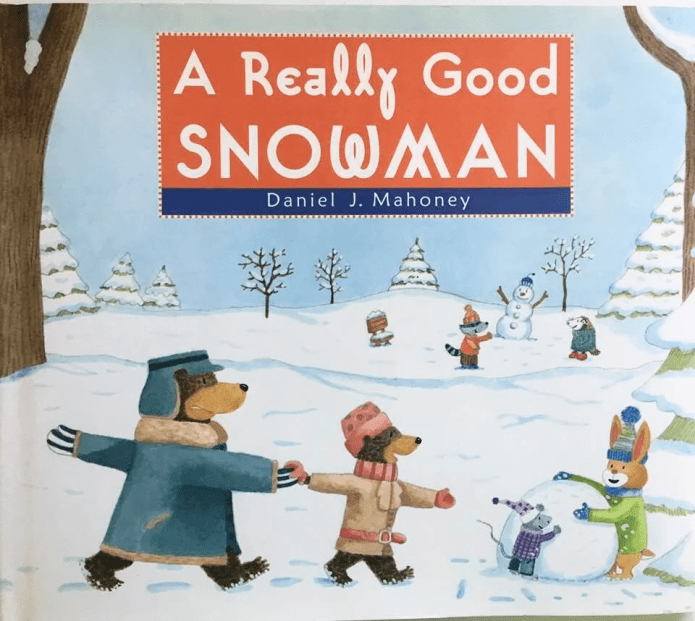
A Really Good Snowman
by Daniel Mahoney
Clarion | 2005 (OP)
. . . . . . . . . . . . . . . . . . . .
• a Society of Illustrators Original Art Show selection, 2005
. . . . . . . . . . . . . . . . . . . .
“In a simple, tender way, this book captures the frustration, love, and annoyance of being an older sibling. Jack’s little sister, Nancy, likes to help with his projects. Unfortunately, her “help” usually spells ruin. When he and his friends enter a snowman-building contest, Nancy tags along. Jack is relieved when the contest rules forbid a fourth team member, and Nancy sulks off to build her own snowman. When some older boys harass her, Jack leaves his friends and helps her. Even though his former teammates take first prize, Jack feels good about his decision. The acrylic illustrations of the animal characters add humor and tenderness to the already sweet, funny story. Their faces are particularly expressive, and the visual jokes add another dimension to the simple text. This is an enjoyable read-aloud that also lends itself well to independent reading.”—School Library Journal
“Mahoney again extols the benefits of cooperation, bringing back the animal cast from The Saturday Escape (2002) for a snowman-building contest in the park. Jack’s pesky little sister Nancy wants to help, but since the rules say only three per team—and Jack already has two friends—she’s on her own. When Nancy’s solo project is attacked by bullies, though, Jack does some soul searching and leaves his buddies to lend her a paw. Nicely reflecting the tale’s intimacy and light tone, the author creates a snowy, spacious landscape in which snowmen of diverse, often humorous design, and their small, furry, well-bundled-up creators mingle. In the end, Nancy’s snow bear doesn’t win the prize—but Jack discovers that he’s had such a good time helping her that it really doesn’t matter, and home they go, hand in hand. A well-crafted, low-key tale, more warming than a cup of steaming cider.” —Kirkus Reviews
“Bear Jack is relieved to learn that his little sister can’t work with him and his friends in a snowman contest–only three are allowed per team–until his conscience gets the better of him. There’s nothing original about the theme or the resolution, but the leisurely storytelling and witty art distinguish this offering from others of the sibling-trouble variety.” —Horn Book
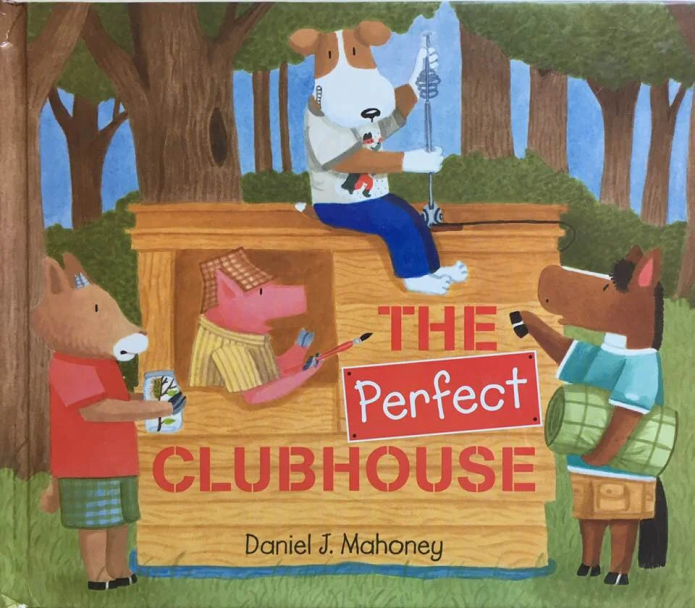
The Perfect Clubhouse
by Daniel Mahoney
Clarion | 2004 (OP)
. . . . . . . . . . . . . . . . . . . .
• a Bank Street Books Best Book of the Year of 2004
. . . . . . . . . . . . . . . . . . . .
“It’s that ancient urge: a room of one’s own; better yet, a clubhouse of mates. But the four friends from The Saturday Escape (2001) soon learn that one dog’s dream clubhouse doesn’t jibe with that of the goat or horse or pig. After all the camaraderie of building the house, the spirit of the place melts into air as the friends pursue their separate interests. They soon enough discover that a clubhouse can be a home of many rooms, and all becomes right in their small world—until, of course, they start thinking about how to make it better still. If the story line isn’t especially memorable—it turns on epiphany rather than narrative inventiveness—the telling is: “Stanley Bartholomew! What did I tell you about conducting science experiments in the house?” “But Mom . . . We’re pushing back the frontiers of knowledge.” And the art is in another league altogether, with multiple panels of genial, graphic watercolors that ought to light a spark in young readers to start building.“—Kirkus
“When four animal friends decide to build a clubhouse, they discover that it isn’t easy to achieve perfection. After trying to determine the right location, the companions discover that each one of them has a different idea of what their new construction should be used for-conducting science experiments, creating works of art, camping out and telling scary stories, or playing superheroes. They begin to grow irritated with one another when their individual visions for their shared space don’t seem to meld. After a testy period in which each child plays alone, the pals decide that pursuing activities together is the best way to have a good time. The colorful, comfortable watercolor artwork is childlike in its simplicity and use of perspective. The text is notable for exploring the friends’ difficulties without using harsh language, even when the characters are most upset with one another. Mahoney’s slice-of-life view of friendship and cooperation will strike a chord with children struggling to navigate the sometimes tricky shoals of negotiation with their playmates.”—School Library Journal
“Julius, Floyd, Heston, and Stanley build a clubhouse together, and mighty fine it is. But the four friends discover they have very different ideas about where it should be, or what they should do inside it. Stanley wants to conduct science experiments, Julius wants to paint, Heston wants to camp out, and Floyd wants to spy-proof everything and play superheroes. The four friends–a pig, a horse, a dog, and a bull, simplified, anthropomorphized, and cartoony–glumly wonder if they will ever play together again. But cooperation saves the day, everyone tries everything, and they even put the clubhouse in the middle of the yard, equidistant from the garden, the pond, and the woods. Cheery watercolors set the scene, but on the final page Stanley wonders if what they really need is a tree house.”—Booklist
Ocean Wonders
written by Dorothea DePrisco Wang
illustrated by Daniel J. Mahoney
Tide Mill Press | 2007 (OP)
I See a Monster!
written by Laurie Young
illustrated by Daniel J. Mahoney
Piggy Toes Press | 2006 (OP)
The Happy Hippos
written by Liza Charlesworth
illustrated by Daniel J. Mahoney
Scholastic | 2005 (OP)
I Can Make a Difference All Around My House
written by P.A. Bonner
illustrated by Daniel J. Mahoney
Piggy Toes Press | 2009 (OP)



 Bookmark Literary